Decarbonising passenger shipping is not a question of finding the one fuel or technology that solves everything. As regulatory pressure builds and passenger expectations shift, the industry’s route to net zero is being assembled from a portfolio of solutions – with low-carbon fuels, shore power, digital optimisation and tighter emissions accounting all playing a part. Cruise lines and their supplier networks now envisage decarbonisation as a layered engineering challenge rather than as a single switch to flip.
Fuel remains the most closely watched piece of the puzzle, but there is little consensus on a silver bullet, according to Heike Naigur, senior director of sustainability at Norwegian Cruise Line Holdings (NCLH). “There is unlikely to be a single fuel that serves as a universal solution for the cruise industry,” she says. “We believe the transition will require a combination of technologies, fuels, and efficiency measures tailored to different vessel types, routes and infrastructure availability. NCLH’s collective action strategy focuses on efficiency, innovation and collaboration while monitoring the development of alternative fuel pathways.”
Instead, Naigur foresees the industry making a transition through different types of fuel. “In the near to medium term, biofuels and LNG may play an important role by reducing emissions compared with conventional marine fuels while helping the industry build experience with alternative fuel technologies and infrastructure,” she says. “Looking further ahead, green methanol is promising because it has the potential to support deeper emissions reductions as supply scales and production pathways mature. But long-term success will depend not only on the fuel itself but also on availability, scalability, cost, safety and supporting infrastructure in ports around the world.”
MSC Cruises and Explora Journeys have equipped 22 of their 27 ships with shore power capabilities (Photo: MSC Cruises)
MSC Group’s Cruise Division, which includes MSC Cruises and Explora Journeys, is also prioritising flexibility rather than betting on a single fuel or technology. “We recognise that no single technology represents a complete decarbonisation solution for the shipping industry, and we continue to evaluate performance data across a range of fuels as part of our long-term energy transition strategy,” says Michele Francioni, the line’s senior vice president and chief energy transition officer. “However, we are confident that bio-LNG and other renewable methane pathways are among the most practical, cost-effective and scalable options going forward. These fuels are able to deliver significant lifecycle emissions reductions and even achieve net-zero emissions while working with existing engine technologies and infrastructure.”
The cruise company has backed that confidence with significant investment. “In 2025, MSC Cruise Division purchased over 9,800 tonnes of certified renewable fuels, resulting in emissions reductions of nearly 49,000 tonnes of carbon dioxide equivalent (CO2e).”
Both cruise lines are pairing fuel strategy with efficiency retrofits onboard their vessels. “Our approach to decarbonisation focuses on a combination of operational efficiency, technology upgrades and infrastructure readiness,” says Naigur, pointing to NCLH’s Sail & Sustain programme. “We are investing in measures such as shore power connectivity, waste heat recovery systems, energy-efficiency improvements and technologies that help optimise vessel performance and reduce fuel consumption. While no single technology will deliver decarbonisation on its own, the cumulative impact of these initiatives is meaningful.”
MSC Group has looked to digital tools to help in its own decarbonisation journey. “We have installed Oceanly Performance, an advanced software system, on all ships in the fleets of MSC Cruises and Explora Journeys,” explains Francioni. “This innovation allows us to collect and review thousands of raw data points to monitor every aspect of energy consumption in real time onboard, to optimise propulsion performance and hotel loads, to significantly reduce fuel consumption and emissions.”
The results are already showing promise. “In 2025, operational efficiency measures reduced emissions by more than 52,000 tonnes of CO2e,” he says. “More than 60 per cent of these reductions came from propulsion improvements, with a further 35 per cent driven by enhancements in hotel operations, and the remainder from engine load optimisation.”
Shore power technology is emerging as one of the most significant solutions in the industry’s sustainability strategy. “When ships are in port, shore power offers one of the most significant opportunities to reduce emissions by allowing vessels to connect to the local electrical grid rather than running onboard engines where infrastructure is available,” says Naigur.
The road towards widespread adoption of shore power has now been in the making for years. “We have fitted shore power capability as standard on all our ships since 2017 and continue to retrofit it across the fleet,” says Francioni. “By the end of 2026, MSC Cruises and Explora Journeys will have a total of 22 ships out of 27 equipped with shore power capabilities. In 2025, MSC Cruises and Explora Journeys ships made 217 shore power connections totalling 1,607 hours connected and 12,866 megawatt hours consumed.”
There are still barriers to be overcome before the technology’s full potential can be realised, though. “Connecting to shore power can increase operational costs by 20 per cent to 60 per cent compared to producing electricity using ships’ engines,” says Francioni. “This highlights the need for fair and transparent pricing mechanisms and consistent approaches across ports to support uptake and accelerate investment in port infrastructure.”
MSC Group is also using digital tools to sharpen itinerary planning. “The way we design and optimise itineraries can achieve significant energy savings and emissions reduction by adjusting arrival and departure time, port sequencing and deploying ships most suitable to a particular itinerary,” says Francioni. “OptiCruise is a digital itinerary optimisation tool now used across MSC Cruises and Explora Journeys to plan routes that can improve energy performance by balancing environmental and commercial considerations.”
When it comes to regulation, Francioni argues policy needs to move in step with technology. “We support the role of the International Maritime Organization as the global regulator for international shipping, and the target of achieving net-zero greenhouse gas emissions by or around 2050,” he says. “A globally coordinated approach is essential to provide clarity for investment and avoid fragmentation across regions. Clear, consistent and well-designed regulation will be critical to accelerating development and scaling of the technologies and fuels needed to enable the maritime sector’s transition.”
Neither operator claims to have solved decarbonisation, but both are making significant strides towards more sustainable operations as innovation continues across all aspects of their newest vessels. As Naigur puts it: “The most effective path to decarbonisation will likely combine cleaner fuels with operational and technological improvements rather than relying on any single solution.”
Norwegian Viva received a biofuel blend while in the Port of Piraeus, further advancing NCLH’s alternative fuel testing efforts. To date, over 70 per cent of the company’s fleet has been tested using biofuel blends (Photo: NCLH)
The route to zero
CFR profiles a range of organisations with products and services to help cruise and ferry lines progress their net-zero ambitions
Alfred Maritime
Alfred Maritime helps cruise and ferry operators cut reported greenhouse gas intensity by replacing FuelEU Maritime’s 3.1 per cent default methane slip factor with verified, vessel-specific data through Engine Load Monitoring (ELM), as set out in IMO Resolution MEPC.415(84). Its Meyer Energy Management System software and standalone ELM Easy Verify module continuously compute and forecast methane slip from engine load data, logged in regulatory compliant intervals and processed into verifier-ready annual figures. Well-optimised dual-fuel engines can measure over 50 per cent below the regulatory default, delivering a real competitive and cost advantage under FuelEU and EU ETS while also giving operators early visibility of any underperforming engines.
Bluefin Technology
Bluefin Technology’s Fuel Treatment System (FTS-9000) helps passenger vessels reduce their environmental footprint by improving fuel quality and combustion efficiency. Using proprietary liquid shear technology, the system reduces fuel droplet size to below three microns while breaking down asphaltene agglomerations, resulting in cleaner, more complete combustion. Operators typically achieve fuel savings of two to five per cent, up to 60 per cent lower particulate mass, and around 80 per cent less sludge production, while also reducing maintenance requirements and extending engine component life.
Brombach & Gess
Brombach & Gess’ Integrated Solar PV Glazing transforms traditional glass surfaces into active energy-generating elements. The technology is integrated into the glass itself, which means a cruise ship can use its glazed areas for renewable energy production while preserving its design. Available PV glazing configurations include low-transparency with more than 40 watt-peak per square metre (Wp/m2), medium-transparency with more than 34 Wp/m2 and high-transparency with more than 28 Wp/m2. Areas requiring maximum power output can utilise lower-transparency glazing, while panoramic locations can benefit from high-transparency solutions that maintain unobstructed sea views.
Carnegie
Carnegie’s Xorel Cruise wallcovering and Xorel Luxe indoor/outdoor upholstery support decarbonisation by helping cruise operators reduce the material impact of interior surfaces over time. Engineered for long service life in high-traffic marine environments, Xorel is durable, cleanable, PVC-free, and engineered without added finishes, helping minimise replacement cycles and maintenance demands. Xorel Luxe uses biobased Xorel yarn derived from rapidly renewable sugarcane, generating a significantly reduced carbon footprint. Biobased Xorel captures 2.5 tons of carbon for every 1 ton of raw material produced.
Genevos
Genevos’ XPM platform is designed to help shipping operators cut emissions while maintaining the power, reliability and operational flexibility required at sea. Based on high-efficiency solid oxide fuel cell technology, XPM converts fuels such as LNG, biomethane, e-methane and future low-carbon fuels into electricity with electrical efficiency above 60 per cent. Therefore, XPM can reduce fuel consumption and carbon dioxide emissions by up to 30 per cent compared with conventional internal combustion engines, eliminate methane slip, significantly reduce air pollutants and enable almost 100 per cent carbon capture thanks to its concentrated exhaust stream.
Lloyd’s Register
As LNG-fuelled cruise ships mature, the earliest adopters are now facing their first major renewal surveys and dry-dockings – involving systems far more complex than conventionally fuelled vessels. LR’s Cruise Ship Centre of Expertise led the technical alignment, planning discipline and global survey coordination behind Europe’s first major LNG dry-docks for large passenger vessels: P&O Cruises’ Iona and Carnival Cruise Line’s Mardi Gras. Delivered after more than a year of detailed collaboration and risk management, this programme establishes the procedural groundwork for how the industry approaches alternative-fuel maintenance as operators move towards methanol, biofuels and synthetic fuels.
Manta Marine Technologies
Manta Marine Technologies
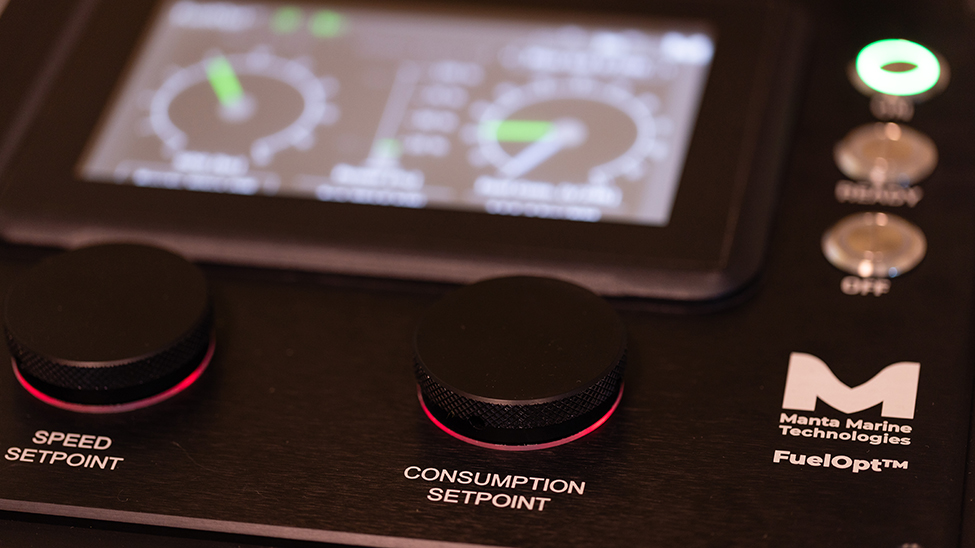
The FuelOpt system from Manta Marine Technologies is designed to optimise vessel operations and performance, especially when combined with insights from the fleet performance team. Installed on over 500 vessels, FuelOpt optimises fuel efficiency through real-time, automated propulsion adjustments. The EnergyOpt system utilises variable frequency drives for pumps and fans, reducing fuel consumption by lowering their power usage. It continuously monitors operating conditions and automatically adjusts motor speeds to match real-time demand. Tailor-made turnkey shore power solutions – available in both high and low voltage – are offered for all vessel types. Manta Marine Technologies’ systems assure regulatory compliance, cut operational costs and reduce emissions from day one, with a favourable return on investment.
NAPA
Decarbonisation starts with data operators can trust. The NAPA Fleet Intelligence Environmental Module turns real operational data from the ship into reliable environmental key performance indicators (KPIs) across fuel and energy, emissions, waste and water. Everything reaches shore in real time, giving environmental, fuel and energy management, compliance and fleet teams one trusted source of truth for FuelEU Maritime, EU ETS, IMO-DCS reporting, and all other sustainability KPIs. Recorded once and used many times, it cuts the manual admin and the errors that come with re-keying data.
Naval Office
Naval Office introduces the Circular Powerplant, a novel concept of electricity generation onboard seagoing vessels based on high temperature solid oxide fuel cells powered by methanol. The unique temperature management of the plant increases fuel efficiency to over 84 per cent – more than twice as much as achieved by high-speed diesel generators. This reduces the energy consumption by half which offsets the lower energy density of methanol compared to diesel. The system is designed to deliver 50 per cent carbon savings, with further emission reduction potential via green methanol.
Pinfabb
Pinfabb’s Poseidon Stabilizer Control System helps vessels reduce fuel consumption and associated carbon dioxide emissions by optimising stabilisers’ performance in real time. The system continuously checks and adjusts fin operation according to sea conditions, vessel speed and motion response, minimising unnecessary fin angles and hydrodynamic drag while maintaining passenger comfort. Compared with legacy control systems, Poseidon improves stabiliser efficiency, reduces power demand and enables more consistent operation across the fleet. In addition, advanced monitoring and diagnostic functions support predictive maintenance, helping operators maintain peak system performance and avoid efficiency losses throughout the vessel lifecycle.
SGS
SGS, the world’s largest testing company, supports the maritime industry with comprehensive exhaust emissions testing and monitoring services, helping operators comply with requirements including International Maritime Organization nitrogen oxide (NOx) regulations, EU MRV, MARPOL Annex VI, and California Air Resources Board (CARB) standards. From greenhouse gas and NOx testing to opacity measurements, sensor verification, and SCR efficiency assessments, SGS delivers the independent data and expertise needed to keep fleets compliant, efficient, and ready for the future.
Silverstream
The Silverstream System reduces frictional resistance between the water and the hull surface, reducing net fuel consumption and associated emissions by an average of five-10 per cent. The system is unique in that it is the only proven air lubrication technology that can be retrofitted in 10 days or less, as well as being applicable to newbuilds. It lasts the lifetime of the ship, is complementary to and can be used in conjunction with other clean technologies. Silverstream has successfully verified the savings that its technology creates through third-party assessment from organisations including Lloyd’s Register, HSVA and the University of Southampton.
Wärtsilä
Wärtsilä’s advanced NextDF technology expands methane slip reduction capabilities for LNG-fuelled, 4-stroke dual-fuel engines and is currently available across three Wärtsilä engine platforms. The solution can reduce methane emissions down to as low as 0.9 per cent of fuel use across a wide load range, while maintaining high efficiency and performance across the load range. By optimising combustion, NextDF supports compliance with tightening regulations and enables lower lifecycle greenhouse gas emissions, providing a practical, scalable pathway to more sustainable passenger vessel operations.
Discover more insights on the passenger shipping industry in the Autumn/Winter 2026 issue of Cruise & Ferry Review. To get content like this on a regular basis, subscribe to the print editions or free digital editions of our Cruise & Ferry publications.